
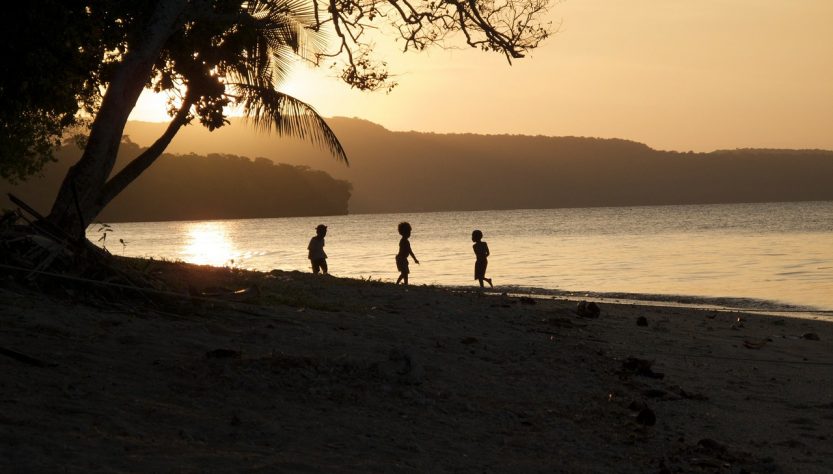
Our blog is all about tourism in Vanuatu, a beautiful island nation in the South Pacific Ocean. Not many people know much about the country, so we’ve put together this blog post to help you get to know it a bit better. Have a read to learn some interesting facts about Vanuatu and see what makes this place so interesting and appealing.
Funny Song Title
The title of the country’s national anthem may look and sound funny to some. It’s ‘Yumi, yumi, yumi’ and it translates as ‘We, we, we’. It’s a rather short song that speaks about how God has given the people of Vanuatu the land they live on and how proud the peo-ple are to live there. The national anthem contains references to God because the vast majority of the country’s population are Christians.
Tourism Numbers
Vanuatu is home to around 300,000 people and before the COVID-19 pandemic hit this was roughly how many tourists the country welcomed each year. Most of the country’s visitors are from Australia or New Zealand. They visit to see the islands’ many natural fea-tures, soak up the culture and unwind.
National Dish
Lap-lap is considered to be Vanuatu’s national dish. The way this popular is prepared is as follows:
- Take some taro or yam roots
- Grate the food into a paste
- Wrap the paste in banana leaves
- Apply fresh coconut cream
- Cook in an underground stone oven
Meats such as beef, chicken and pork can be added to the lap-lap.
The Climate
One of the most appealing aspects of Vanuatu is its climate. The country has a tropical climate that can be split into two main seasons: there’s the cooler months from May to September and the warmer months from October to April. If you’re thinking of visiting, Oc-tober and November are good months during the warm season to pick. This is because from December through to April, there can be frequent bouts of rain and even cyclones.
A Dangerous Place to Be
Believe it or not, Vanuatu has actually been named the most dangerous country in the world when it comes to natural disasters. In 2015 a World Risk Report was published. This study looked at each country’s chances of experiencing disasters such as droughts, rises in sea level and earthquakes, among others. It found that Vanuatu was the most dangerous, with a score of 36.43%. The second most dangerous was Tonga, whose score was 28.23%.
The Birthplace of Bungee Jumping
Bungee jumping is an adrenaline-pumping activity that’s not for the faint of heart. The daring pursuit, which many thrill-seekers around the world enjoy, is believed to have orig-inated in Vanuatu. For many hundreds of years, people living on the island of Pentecost have been practising Nanggol.
This is a ritual where wooden towers up to 30 metres in height are constructed and young men jump from them with vines attached to their ankles. The jumpers actually hit the ground, though the vines absorb enough of the force from the impact that the dives are never lethal. Nanggol serves two purposes: it tests the young men’s bravery and acts as a symbolistic passage from boyhood to adulthood.
Cannibalism
Cannibalism was for many generations a part of tribal culture across the islands of Vanu-atu. Thankfully though, that practice seems to have been consigned to the past. Accord-ing to anthropologists who have long been studying the country, the last cannibalistic killing took place back in 1969.
A Diver’s Dream
Like many other South Pacific Ocean islands, Vanuatu is home to its fair share of im-pressive dive sites. One of the best is undoubtedly the wreck of USS President Coolidge, a luxury line some 650 feet in length. It was active during the Second World War and had the role of transporting troops.
In 1942, it was carrying around 5,000 soldiers when it came into contact with two mines in Santa Harbour. The ship ended up sinking near Luganville, one of the biggest settle-ments in Vanuatu. The vast majority of those onboard managed to make it off the ship before it receded into the waters and was fully submerged.
Nowadays, the site of the USS President Coolidge is popular with divers thanks to the well preserved state of the ship and the many things that can be spotted in and around its wreck. These include:
- A statue of a lady riding a unicorn
- Chandeliers
- Jeeps
- Trucks
- Cannons
- A fountain made from mosaic tiles
Familiar Sounds
In Vanuatu there are three official languages: Bislama, English and French. Bislama is a curious language that’s spoken throughout Vanuatu and in no other country. Many peo-ple in the cities of Port Vila and Luganville speak it as a first language, while people in other settlements have it is a second or even third language.
What makes Bislama interesting is the fact that roughly 95% of its vocabulary is derived from English. Many of the words and phrases used in the language will look and sound familiar to English speakers. The phrase ‘buk blong mi’ means ‘the book belongs to me’ – you can easily see how the Bislaman words sound just like English ones.